

Such a company might be more vulnerable to economic downturns or rising interest rates, as its debt obligations could become more burdensome. Preferred stock is another type of ownership that offers a higher claim on a company’s assets and earnings compared to common stock. Preferred stockholders receive fixed dividends before common stockholders and have priority in receiving payments if the company liquidates, though they often do not have voting rights. Amounts received for preferred stock above its par value are recorded as additional paid-in capital.
Create a free account to unlock this Template

Normally, the investors and firms decide to reuse this amount and reinvest the same in the company. The shareholders’ equity comprises components that play an important part in determining the company’s net worth. The SE ratio measures the proportion of a company’s total assets financed by SE (rather than debt). For example, a company may have shareholder equity of $1 million as of the first quarter and then issue new shares during the HOA Accounting second quarter, raising shareholder equity to $1.5 million.
- Finally, the number of shares outstanding refers to shares that are owned only by outside investors, while shares owned by the issuing corporation are called treasury shares.
- In a market of buyers and sellers, the current value of any stock fluctuates moment-by-moment.
- All of the asset and liability line items stated on the balance sheet should be included in this calculation.
- For example, in scenarios where the debt value exceeds the total assets that the firms own, the shareholders’ equity is negative.
- On the other hand, if the market demands 8.9% and the stock is a 9% preferred stock with a par value of $50, then the stock will sell for slightly more than $50 as investors see an advantage in these shares.
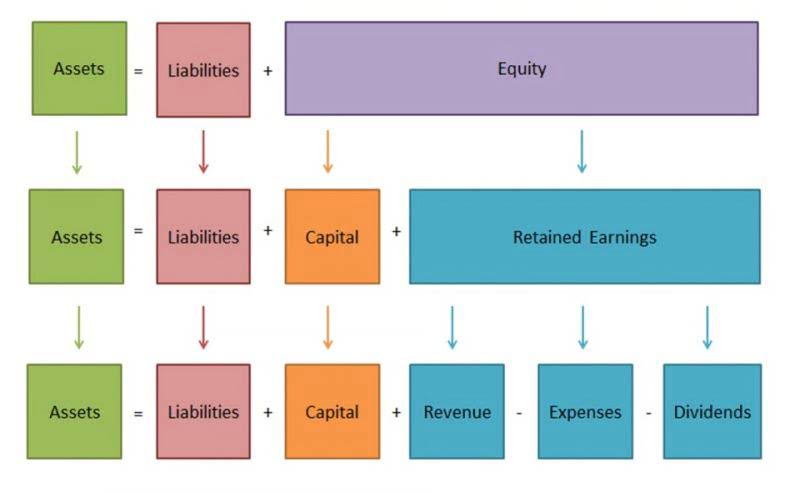
- The shareholders’ equity is the remaining amount of assets available to shareholders after the debts and other liabilities have been paid.
What is the Balance Sheet?

Every corporation has common stock and those owners are known as common stockholders. Some corporations also issued preferred stock and those corporations will have both common stockholders and preferred stockholders. If a corporation purchases a significant amount of its own stock, the corporation’s earnings per share may increase because there are fewer shares outstanding.
Accounting for changes to stockholders’ equity
- The actual amount received for the stock minus the par value is credited to Paid-in Capital in Excess of Par Value.
- The following is data for calculating the Shareholder’s equity of Apple.Inc for the period ended on September 29, 2018.
- The $20 per share times 30 shares equals the $600 that was credited above to Treasury Stock.
- The “ideal” ratio is not universal and can vary significantly across industries and company strategic objectives.
- After a 2-for-1 stock split, the same stockholder still owns just 1% of the corporation (2,000 ÷ 200,000).
- Total equity represents the cumulative value of ownership in a company, while net income refers to earnings generated during a specific period.
It is calculated by subtracting total liabilities from total assets.BVE reflects the historical cost of a company’s assets minus depreciation and liabilities, providing a snapshot of the company’s accounting value. This metric is based on tangible assets and does not account for intangible factors like brand value, intellectual property, or future growth potential. This means the stockholders’ equity of the company is $300,000 how to find total stockholders equity when calculated directly from total assets and total liabilities. Let us consider an example to compute the total equity for a company called ABC Limited. It is in the business of manufacturing customized roller skates for both professional and amateur skaters.
Book Value of Equity vs. Market Value of Equity: What is the Difference?
Here, we’ll assume $25,000 in new equity was raised from issuing 1,000 shares at $25.00 per share, but at a par value of $1.00. Considering the structure of roll-forward schedules—in which the ending balance of the current period is the beginning of period balance for the next year—the ending balances will link to the beginning balance cells. In contrast, early-stage companies with a significant number of promising growth opportunities are far more likely to keep the cash (i.e. for reinvestments). The excess value paid by the purchaser of the shares above the par value can be found in the “Additional Paid-In Capital (APIC)” line item. For the past 52 years, Harold Averkamp (CPA, MBA) hasworked as an accounting supervisor, manager, consultant, university instructor, and innovator in teaching accounting online. Preferred stock where the dividend could be more than the original, https://aandd.ru/analiticheskie-vesi/accounting-bookkeeping-company-in-ny/ stated dividend.
- But overall, it’s a much less complicated formula than other calculations that are used to evaluate a company’s financial health.
- The stockholder’s equity is available as a line item in the balance sheet of a company or a firm.
- For creditors, a lower ratio is preferable because it signifies a reduced risk exposure.
- Tracking the liabilities to stockholders’ equity ratio over several periods can reveal whether a company’s financial leverage is increasing, decreasing, or remaining stable.
- In normal circumstances, you would expect measures of borrowing costs to be falling across the board.